

In a modern courtroom or mediation hall, a massive comprehension gap often exists between complex medical facts and the actual laypeople tasked with evaluating a claim. When an individual suffers a severe, life-altering injury, their entire experience is routinely boiled down to a dense stack of paper records. Hospital charts, billing codes, surgical summaries, and physician progress notes are compiled into a massive document file. While these papers are legally necessary, they are also incredibly dry, mechanical, and hard for an average person to truly understand or care about.
Furthermore, many of the most devastating outcomes of an accident are abstract and invisible to the naked eye. Soft-tissue tears, deep nerve impingements, chronic fatigue, and cognitive confusion cannot be seen on a standard photograph. Proving that an injury has completely ruined a victim’s quality of life is an uphill battle when relying exclusively on oral testimonies or technical doctor notes. This is where professional legal media becomes an indispensable tool. Deploying high-definition video, strategic photography, and advanced medical graphics changes the entire narrative. Visual media cuts through administrative noise, translates complex surgical procedures into plain English, and brings an undeniable human truth straight to a claims adjuster or jury. This master litigation guide explores how to build, capture, and present visual evidence to maximize the value of complicated medical claims.
Selecting the Right Legal Advocacy to Build a Visual Case Foundation

A successful litigation strategy starts on day one with a visual-first mindset. Waiting until a few weeks before a trial date to think about graphics, video exhibits, or interactive timelines is a recipe for a low settlement. Long before a lawsuit ever steps foot inside a public courthouse, an insurance adjuster looks over the digital file to grade the risk of going to trial. If they see that a plaintiff’s team has only gathered a few basic bills and a handwritten statement, they will likely offer a lowball payout, betting that the case will fall flat in front of a jury.
To ensure your medical claim is built on an ironclad, high-value visual foundation, focus on these critical legal onboarding and gathering practices:
- Audit Law Firm Media Budgets: When interviewing potential legal representatives, ask explicitly about their case-funding policies. A top-tier firm should have a large, dedicated budget to pay for independent professional legal videographers, expert artists, and medical animation studios up front.
- Capture Trauma Evidence Instantly: Take high-resolution photographs of all physical injuries immediately following the incident. Record deep bruising, surgical incisions, temporary external fixator pins, and facial lacerations before the natural healing process or secondary surgeries soften the visual shock of the initial trauma.
- Record Premature System Audits: Ensure your photography team captures the condition of the accident scene, broken safety equipment, or compromised vehicle panels before properties are altered, cleaned, or destroyed, locking in physical evidence that connects your injuries directly to the incident.
Elite personal injury attorneys understand that a single minute of high-definition video showing a client’s daily struggle is worth more than a thousand pages of typed hospital transcripts. They know that human beings are visual learners who remember what they see far longer than what they merely hear. Partnering with experienced local personal injury lawyers ensures your case is built using local court exhibition rules, making your visual media easily admissible at trial. Local advocates know exactly how to format media files and phrase objections so that your critical video assets are shown to the jury without administrative delays.
Visualizing the Mechanics of Advanced Neurological and Surgical Trauma

Complicated civil litigation often involves advanced anatomical science that leaves the average layperson feeling completely lost. If a lawsuit centers on a complex internal injury, a botched surgical maneuver, or a delayed diagnosis that allowed an infection to destroy internal tissue, words alone cannot bridge the understanding gap. Expecting twelve citizens with zero medical training to look at a raw black-and-white MRI scan and spot a subtle nerve compression is a massive gamble.
To turn dense anatomical trauma into a clear, undeniable story of liability, legal teams should employ these modern graphic production techniques:
- Deploy Three-Dimensional Medical Animations: Work alongside certified medical artists to build high-definition digital animations that illustrate the internal trauma. An animation can show exactly how an improperly placed surgical tool severed a delicate nerve pathway, turning a complex medical argument into an obvious visual truth.
- Color-Code Computerized Diagnostic Scans: Have an expert radiologist color-code and label complex CT scans or MRIs. Highlighting a herniated spinal disc in bright red and shading an impinged spinal cord in blue helps a jury immediately see the exact source of a plaintiff’s chronic pain.
- Film Interactive Expert Video Depositions: When recording the deposition of a treating physician, place a high-quality physical model of the injured organ or joint on the table. Have the doctor physically point to the model while explaining their findings, creating a compelling video exhibit for the courtroom.
A skilled medical negligence attorney routinely uses custom medical graphics to show a jury exactly how a provider deviated from the standard of care during a complex procedure. They can display a side-by-side video comparing a textbook surgical technique against the actual mistakes made by the defendant. By utilizing clear visual timelines, a dedicated personal injury lawyer can easily connect a defendant’s initial mistake to the client’s long-term internal health complications. This step-by-step visual presentation makes it impossible for the defense to blame the victim’s chronic issues on pre-existing health conditions or aging.
Filming Ongoing Physical Rehabilitation Milestones to Prove Damaged Quality of Life
The true cost of a catastrophic accident is measured in the grueling, painful months or years of rehabilitation that follow the initial hospital discharge. However, a jury only sees the plaintiff sitting quietly at the counsel table, looking clean, dressed up, and relatively comfortable. They do not see the hours of grueling sweat, tears, and agonizing effort it takes for that individual just to stand up or take a single step forward. Professional video documentation bridges this gap by capturing the daily struggle of recovery in real-time.
Capturing the reality of a plaintiff’s long-term physical rehabilitation requires a structured filming schedule. Implement these video preservation tips to ensure your recovery footage is impactful and legally sound:
- Document Periodic Recovery Diaries: Schedule a legal videographer to visit the rehabilitation clinic once every three to four weeks over several months. This ongoing footage builds a powerful timeline that illustrates the slow, exhausting, and non-linear nature of a severe physical recovery.
- Focus on Genuine Expressions of Pain: Ensure the camera captures the natural facial expressions, muscle tremors, and physical fatigue experienced by the patient during intense exercises. These authentic, non-verbal indicators provide unmistakable proof of real human suffering that cannot be faked or downplayed.
- Record Clinical Measurement Verification: Have the treating therapist state the patient’s current mobility measurements, such as an isolated knee flex angle, directly to the camera during the session, backing up the visual struggles with objective scientific numbers.
Filming a plaintiff during an intense physical therapy session provides undeniable, real-time proof of the physical pain and exhaustion they endure just to rebuild core mobility. It shows the jury that a simple leg lift or a balance exercise represents a mountain of work for an injured body. Capturing video evidence of specialized adjustments performed by a licensed chiropractor helps visually document the severe, chronic structural misalignments caused by the initial crash. This footage makes the structural injuries visible, showing how gentle manual realignments are necessary to bring comfort to a warped, damaged spine.
Documenting Daily Adaptive Care Routines and Clinical Outpatient Visits

When a major injury leaves a victim with long-term, irreversible damage, their path often moves away from surgical cures and shifts toward lifetime pain management. Living with permanent nerve damage or severe joint trauma forces an individual to seek out ongoing outpatient therapies just to get through a normal day. Visually documenting these alternative care treatments is essential to proving the ongoing, everyday impact of an accident on a victim’s life.
To build a compelling visual presentation that illustrates a life permanently altered by chronic pain, organize your video production around these foundational strategies:
- Contrast Past and Present Lifestyles: Integrate brief clips of healthy pre-accident family home videos right alongside post-accident recovery footage. Showing a plaintiff confidently playing sports with their kids next to a video of them struggling to walk down a hallway creates a powerful visual contrast.
- Highlight the Burden of Travel Logistics: Film the exhausting daily reality of a patient traveling to various outpatient medical centers. Capturing the process of a patient slowly entering a vehicle, driving long distances, and navigating clinic waiting rooms illustrates the heavy time burden of chronic care.
- Record Doctor Explanations of Non-Invasive Paths: Record video interviews with outpatient specialists as they explain why standard surgeries can no longer fix the damage, establishing that the patient’s reliance on ongoing therapies is a medical necessity, not an optional choice.
Documenting the frequency of a client’s visits to local chiropractor clinics helps insurance adjusters understand the ongoing, real-world time commitments required to manage spinal trauma. It proves that the victim must dedicate hours of their busy week to clinical adjustments just to maintain baseline comfort. Showing the clinical reality of undergoing invasive non-surgical pain treatments, such as spinal epidurals, cortisone injections, or radiofrequency nerve blocks, provides undeniable proof that the victim’s pain is severe and continuous. Watching a long needle enter a joint under live X-ray guidance shows a jury exactly what it takes to manage severe post-traumatic nerve pain.
Mapping the Financial Burden of Specialized Mobility Aids and Home Modifications
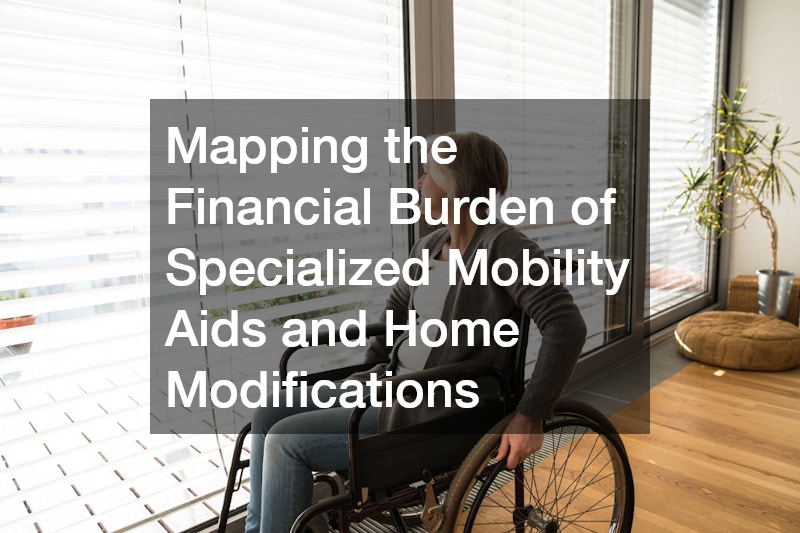
The financial toll of a catastrophic injury reaches far beyond immediate hospital invoices. When a person suffers a permanent disability, their home must be completely transformed into an accessible, medicalized space. Additionally, they must rely on a constant supply of specialized hardware and adaptive equipment to perform basic daily functions. Visually itemizing these changes through an expert “Video Walkthrough” is the single best way to prove long-term economic damages to an insurance company or jury.
To turn an expensive list of lifetime equipment and remodeling needs into an undeniable visual inventory, focus on these documentation targets:
- Conduct an Exterior and Interior Home Walkthrough: Take a camera through the plaintiff’s home to document necessary modifications. Film the installation of expensive outdoor wheelchair ramps, widened interior doorways, lowered kitchen countertops, specialized roll-in showers, and ceiling-mounted patient hoists.
- Record Daily Adaptive Struggle Details: Capture footage of the plaintiff attempting simple, everyday household chores. Show the specialized techniques and extra time required for them to transfer out of bed, prepare a basic meal, or navigate a hallway, highlighting their complete loss of independent living.
- Film the Maintenance of Bulky Machinery: Document the space, electrical power, and storage required to maintain bulky medical machinery inside the home, showing how a cozy family living space has been permanently transformed into a clinical recovery room.
Creating a detailed video inventory of the expensive, specialized medical supplies and assistive devices inside the home gives the jury an undeniable visual list of the economic damages. Seeing shelves stacked with daily medical goods, mobility braces, and adaptive tools transforms a column of numbers on a spreadsheet into a real-world reality. Capturing high-definition footage of a patient during a grueling session of occupational therapy shows the immense, daily effort required to relearn simple, basic tasks like buttoning a shirt or holding a fork. This footage provides an explicit baseline for a life-care planner, helping them confidently calculate the exact lifetime costs of a patient’s ongoing adaptive care needs.
Conclusion
The resolution of a complicated medical claim should never rely on dry paperwork and guesswork. In an era where attention spans are short and information is highly visual, presenting a case through stacks of typed hospital records puts your client at a serious disadvantage. Embracing the power of professional legal videography, anatomical animations, and documented rehabilitation logs allows you to present the absolute truth of an injury with unmatched clarity and impact.
Visual documentation strips away the dense medical jargon and corporate confusion that insurance defense teams use to cloud liability. It connects a judge, jury, or claims adjuster directly to the human reality of an accident, showing them the true physical, emotional, and financial weight of a broken life. Whether you are illustrating a complicated surgical mistake through a 3D graphic or showing the daily struggle of a rehabilitation session, visual evidence turns an abstract claim into a high-value narrative that cannot be ignored.
Take a close, analytical look at your active case files this week. Identify your most complex medical claims where invisible pain, long-term rehabilitation, or dense surgical liability are the core arguments. Move past old-fashioned textbook strategies and bring in a professional legal video production crew to document your client’s daily reality. Investing in professional visual evidence transforms your case file from a basic collection of medical bills into a compelling presentation, ensuring your client receives the full, fair compensation necessary to secure their long-term health, comfort, and peace of mind.